

REPOSAL® Coil Winding Machine has completed the full process development for electron microscope coil winding.
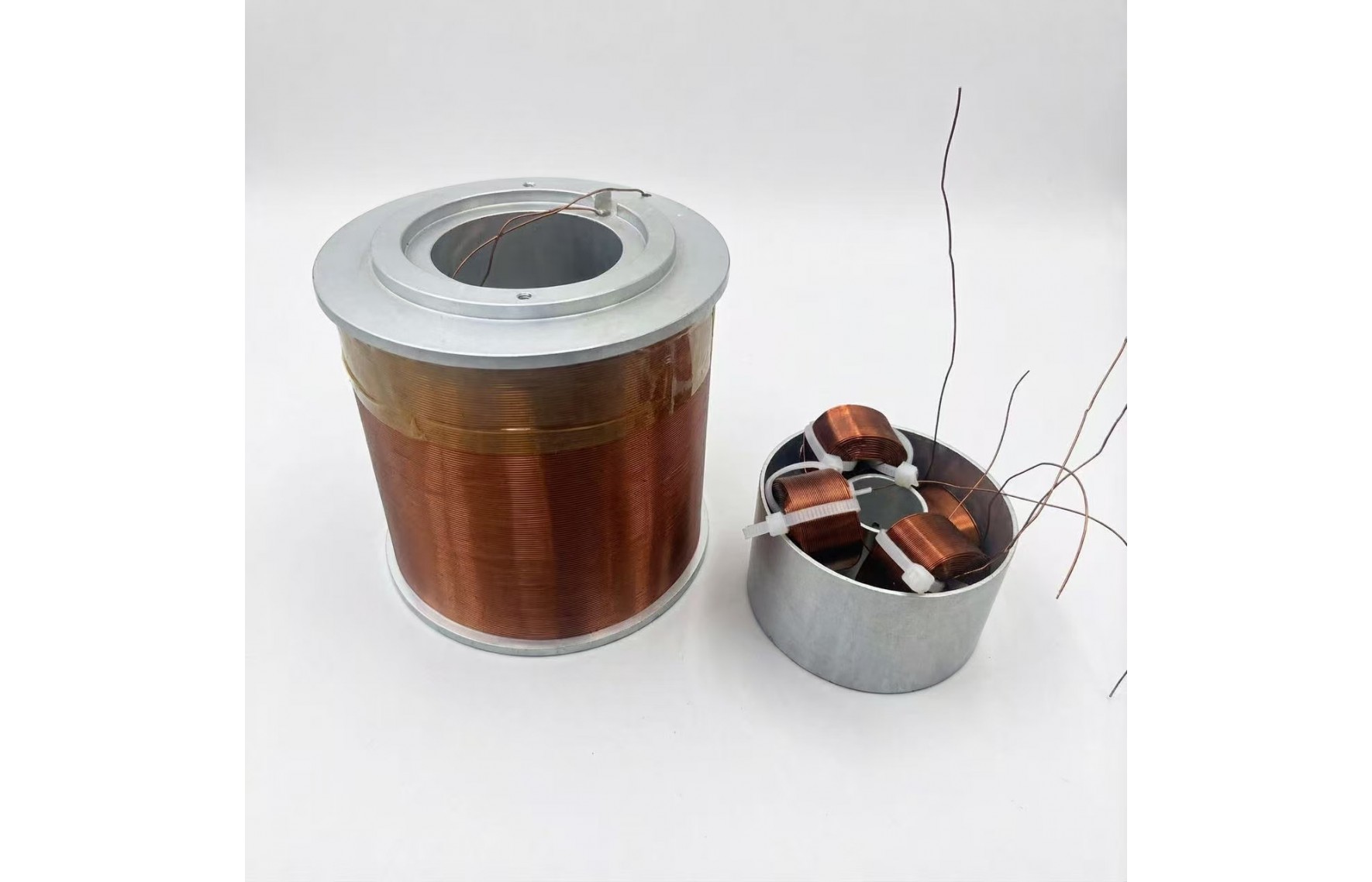
Electron Microscope Coils: Why Can You Buy Electron Microscopes but Not the Coils? — For Those Developing Electron Microscopes
Electron microscopes (abbreviated as EM) are mainly divided into two categories: scanning electron microscopes (SEM) and transmission electron microscopes (TEM). The entire instrument relies on electromagnetic coils inside the column to control the electron beam. **Focusing coils and deflection coils are core components of the electron optical system. Focusing coils generate axisymmetric magnetic fields to converge the electron beam, while deflection coils enable electron beam scanning and optical path alignment. They directly determine the imaging resolution and image stability of electron microscopes.
For domestic electron microscope R&D teams, there is a realistic industry status: complete electron microscopes are commercially available, yet high-performance core supporting coils are extremely difficult to source. For self-developed electron microscope projects, most components including the microscope column, vacuum system and detectors have mature supply chains. Only electron microscope coils, the core of electromagnetic lenses, have become a bottleneck for many R&D projects.
Electron microscopes fall into SEM and TEM categories, with huge price gaps between different models. Basic benchtop SEMs cost roughly 800,000 to 1.5 million yuan; research-grade tungsten filament SEMs range from 1.5 million to 3 million yuan; high-resolution field-emission SEMs generally cost 3 million to 6 million yuan. TEMs start at several million yuan, and high-end spherical aberration-corrected models can reach tens of millions of yuan.
Leading global electron microscope brands include Zeiss (Germany), Hitachi High-Tech (Japan), JEOL (Japan), Thermo Fisher Scientific (United States), and TESCAN (Czech Republic). Domestic independent developers include KYKY, Poly Scientific, and Guojing Instruments. When purchasing electron microscopes from brands such as Zeiss, Hitachi, JEOL, Thermo Fisher Scientific, TESCAN, KYKY and Poly Scientific, buyers can only purchase original spare coils for the same model** for future maintenance and replacement of that specific device. Customers cannot purchase focusing coils and deflection coils of various specifications on demand for iterative development of self-developed electron microscope prototypes.
Even if spare coils are available for additional purchase, obvious drawbacks remain: spare coils are expensive with long lead times. The original manufacturer delivers fully packaged coil assemblies, **without 3D structural drawings, magnetic field parameters or winding process documentation. These spare parts are only suitable for whole-unit replacement and maintenance and cannot support independent R&D and product iteration. For teams developing electron microscopes in-house, purchasing multiple sets of spare coils still cannot grant access to the underlying coil manufacturing technology, and long-term supply chain risks cannot be eliminated. Many self-development teams are thus trapped in a dilemma: complete machine components can be purchased, yet core electron microscope coils cannot be reliably sourced. Teams either buy imported coils at high prices or attempt in-house manufacturing, only to discover extremely high technical barriers.
To understand this challenge, one must first grasp the structure of electron microscope coils. A single electron microscope coil mainly consists of four core parts: precision-wound copper windings, soft-material pole pieces, magnetic shielding housings, and a bobbin integrated with vacuum insulation packaging systems.
Precision copper windings form the coil body. They require ultra-fine wire to be wound precisely using dedicated winding machines and custom tooling, with strict control over winding tension, wire arrangement and interlayer positioning. Winding quality directly affects magnetic field distribution and thermal drift indicators. Pole pieces concentrate and confine the magnetic field by controlling magnetic gaps, serving as key mechanical parts that guarantee magnetic field uniformity and reduce aberration. Magnetic shielding housings close the magnetic circuit, constrain magnetic flux lines, suppress magnetic leakage and reduce interference from external magnetic fields on the electron beam. The bobbin and vacuum insulation packaging system support copper windings while adapting to the high-vacuum environment inside electron microscopes, lowering outgassing rates and ensuring insulation performance and long-term heat dissipation stability.
These four components are tightly coupled. The biggest technical barrier lies not simply in structural design or 3D modelling, but in a mature, complete **winding process**. The wires used for electron microscope coils are extremely thin with a large number of turns, requiring stringent standards for magnetic field uniformity, thermal drift and batch consistency. Even with identical wire and the same winding equipment, minor deviations in winding process parameters will lead to substantial differences in final coil performance. This is the core pain point encountered by many electron microscope R&D teams: general precision winding machines are easy to purchase, yet mature winding processes tailored for electron microscope coils are hard to obtain.
REPOSAL has long specialized in precision coil manufacturing equipment and process development. It independently completes electromagnetic design, structural design, magnetic field simulation, process development and prototype trial production for electron microscope focusing coils (large and small specifications) and deflection coils, with multiple rounds of performance testing and verification. Test results show that its self-developed coils outperform original Zeiss coils of the same model in key indicators including magnetic field uniformity, thermal stability, long-term operational drift, vacuum compatibility and batch consistency. Relevant technical achievements have passed prototype validation in the Xi’an Jiaotong-Liverpool University project. A customer in Shanghai, China, has introduced the full set of technologies to build its own production line and achieve mass production of coils with stable and reliable finished product performance.
REPOSAL provides one-stop electron microscope coil services. Its business is not limited to selling coil samples or individual winding machines. It delivers a complete package covering electromagnetic and structural design of electron microscope coils, 3D structural modelling, exclusive winding processes, matching winding machines, custom winding tooling and full mass-production process routes. What R&D teams receive is not individual samples, but the full technical capability to independently produce high-performance focusing coils and deflection coils.
Many customers developing electron microscopes raise a question: given the critical role of coils, why not simply buy finished coils?
The root cause is the closed nature of the supply chain. Coils from international manufacturers are exclusively for their own complete instruments and are not sold independently with supporting technical documentation. Even if a small number of samples can be obtained, teams will face heavy restrictions when adjusting specifications or carrying out iterative upgrades. The only way to break free from these limitations is to establish independent production capacity. Building a coil production line involves far more than purchasing equipment. The core competitiveness of high-performance electron microscope coils does not come from a single winding machine, but from the matching scheme among coil design, winding processes, magnetic circuit design and the full set of production line equipment. Even with identical winding machines and custom tooling, stable production of qualified electron microscope coils remains impossible without supporting process parameters, magnetic field simulation schemes and vacuum packaging technologies.
For this reason,REPOSALadopts a full production line technology transfer model, with deliverables covering six sections: finalized coil product drawings and 3D structural drawings; complete mass-production process routes and standard operating procedures; supporting equipment selection schemes, including design and selection of winding machines and tooling as well as production line layout planning; finished product inspection methods and performance acceptance criteria; technical consultation, on-site technical guidance and hands-on operator training; prototype trial production support and guidance for process issues during mass production.
After purchasing equipment, fabricating winding tooling and setting up production lines in accordance with our technical solutions and passing prototype acceptance, customers gain the capacity for independent mass production of electron microscope coils. Project acceptance is **judged based on the performance indicators of coils produced on the customer’s production line, rather than hardware such as winding machines and tooling**. This demonstrates accountability for customers’ R&D projects and confidence in our self-developed technologies.
Different service providers in the market have clear business boundaries.
International electron microscope manufacturers only sell complete instruments and matching original coils, and their manufacturing technologies are not transferred externally. Research institutes and a small number of electromagnetic lens manufacturers can undertake prototype OEM production, but cannot provide dedicated winding machines, custom winding tooling or complete mass-production processes. General precision winding machine vendors only sell hardware equipment and do not master technologies related to electron microscope coil magnetic field simulation, electromagnetic design, vacuum insulation and thermal drift control. They cannot resolve process challenges in coil development after equipment delivery.
REPOSAL is one of the few domestic suppliers offering a full-chain integrated solution integrating **coil design + winding process + winding machine + winding tooling + full production line technology transfer**. It can deliver complete development and mass-production solutions for focusing coils and deflection coils simultaneously, helping electron microscope self-development teams build independent production lines.
In the domestic localization drive of the electron microscope industry, electron microscope coils represent a key weak link. The industry is not short of channels for purchasing complete machines and components, but lacks ready-to-implement, prototype-verified complete process systems.REPOSALtransfers this fully validated set of technologies to help more R&D teams break supply restrictions on imported coils and master independent mass production of focusing coils and deflection coils. If you are developing electron microscopes in-house or planning to build an electron microscope coil production line, you are welcome to engage in technical exchanges.
Related Post
REPOSAL® Coil Winding Machine has completed the full process development for electron microscope coil winding.
Scanning and transmission electron microscopes (SEM/TEM) rely on focusing and deflection coils inside the column to control electron beams, which directly determine imaging resolution and stability. There is an industry pain point: complete instruments are available for purchase, yet high-performance electron microscope coils are difficult to source on demand. Foreign brands only supply original spare parts matching their own models, which come with high prices and long lead times. They also withhold drawings, magnetic field data and process documentation, making independent R&D iteration impossible. Meanwhile, in-house development and manufacturing face extremely high technical barriers.
Electron microscope coils consist of precision windings, pole pieces, magnetic shielding, and vacuum insulation encapsulation, with mature winding technology serving as the core technical barrier. XIEPU independently completes the design, simulation and trial production of electron microscope focusing and deflection coils. Its measured performance outperforms original imported coils, and relevant projects have achieved mass production. We do not sell samples or equipment separately. Instead, we provide coil design, customized winding processes, winding machines and tooling, as well as full production line technology transfer. Deliverables include drawings, SOPs, inspection standards and on-site training. Acceptance is based on the coil performance achieved on the customer’s production line. We help electron microscope R&D teams realize independent mass production of coils, break foreign supply chain blockades, and welcome technical exchanges.
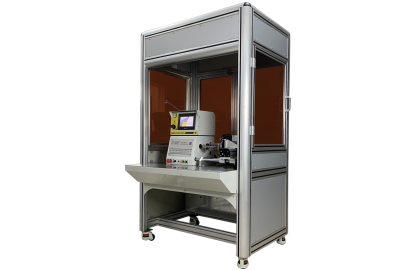
Official After-sales Service Policy for REPOSAL® Winding Machines
1. General Provisions
- This policy is the sole official document governing the after - sales service of REPOSAL winding machines. It has the same legal effect as the sales contract and applies to all REPOSAL equipment sold and installed within the territory of China (excluding Hong Kong, Macao and Taiwan).
- Service Objectives: Ensure the stable operation of equipment, reduce customer downtime losses, provide full - life - cycle technical support, and guarantee a customer satisfaction rate of ≥ 98%.
- Service Principles: Customer - centric, adhering to the service philosophy of "Rapid Response, Accurate Diagnosis, Efficient Resolution, and Long - term Guarantee".